
Bumblebees
Often noticeably furry, bumblebees include social species whose queens establish seasonal nests and raise worker daughters. Some species have different lifestyles, so the same story does not fit every bumblebee.
OUR LITTLE MASCOT. A BIGGER CONVERSATION.
A familiar face for our business.
A little reminder to look after nature.
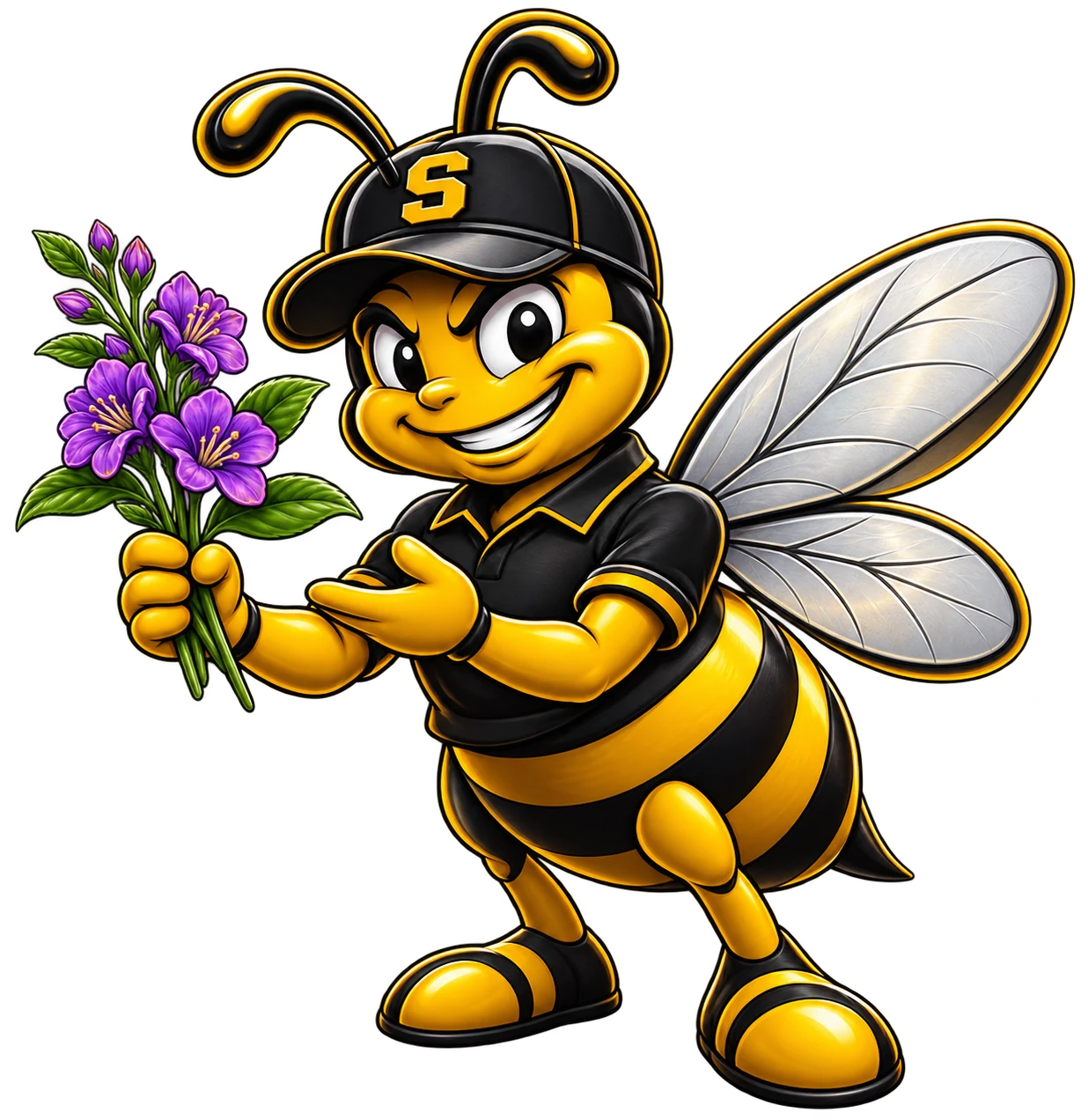
Our bee brings a bit of Sandycroft personality to the workwear, printing and embroidery we do. We’re also putting that friendly face to work for real bees: sharing expert advice and helping visitors support our chosen bee charity, the Bumblebee Conservation Trust.

A BIT OF BLACK & GOLD CHARACTER

Confident, cheerful and dressed in our colours, the Sandycroft Bee is the friendly character in our branding. The cap, wings and black-and-gold finish make it unmistakably part of the Sandycroft family.
We see our mascot as a celebration of getting stuck in, taking care over the details and helping a business look its best. From an embroidered logo to a printed T-shirt, it is a little piece of personality behind the work.
The character is a mascot, rather than an illustration of a particular bee species. Real bees come in many shapes, sizes and colours. Helping them starts with noticing the ones sharing our gardens, streets and green spaces.
OUR CHOSEN BEE CHARITY
Bumblebee Conservation Trust
Our mascot gets people talking. We want that conversation to help real bees. We’ve chosen to shine a light on the Bumblebee Conservation Trust, a UK charity dedicated to protecting wild bumblebees through conservation, science and education.
Its work includes improving flower-rich habitats, monitoring bumblebee populations and helping communities and land managers care for the places bees need. The Trust also works in Wales, including its Cynefin i Wenyn project along the Carmarthenshire coast ↗.
You’ll give through the charity’s own website and choose your amount there. Sandycroft does not collect these donations or add a charitable charge to workwear orders.
Registered Charity 1115634 · Scottish Charity SC042830
View the Charity Commission register ↗
HOW SANDYCROFT IS HELPING
We’re giving bees a place on our website, sharing advice from conservation experts and making it easy for our customers and community to give directly. You can join in by donating, planting for pollinators or passing on a helpful guide.
Choose a practical step ↓Our current support through this page is awareness and signposting. This does not imply formal charity partnership or business membership.
MORE THAN A BUZZ
When bees visit flowers to collect food, they can carry pollen between them. This pollination helps many plants produce seeds and fruit. It connects flowering plants, the food we grow and the wildlife that depends on them.
Bees need nectar for energy and pollen to feed their developing young. A flower-rich patch offers food; suitable nesting and resting places provide somewhere to live. Different bees use different habitats, so variety matters.
Bees share the job with hoverflies, butterflies, moths, beetles and other insects. A space that welcomes pollinators can help far more wildlife than the bees you first notice.
Explore the RHS guide to garden bees ↗GET TO KNOW YOUR VISITORS
Here are three familiar groups you might see around Flintshire and the wider UK. These descriptions are a starting point; use an expert identification guide for individual species.
Often noticeably furry, bumblebees include social species whose queens establish seasonal nests and raise worker daughters. Some species have different lifestyles, so the same story does not fit every bumblebee.
Mason bees, leafcutters and mining bees are among the solitary bees. Females usually make and provision their own nests, sometimes close to others. Depending on the species, nests may be in soil, hollow stems or existing holes.
Honeybees live in colonies, often cared for by beekeepers. Their workers collect pollen and nectar, and the colony uses stored honey as food. A honeybee hive is quite different from a seasonal bumblebee nest.
A POT. A PATCH. A PLACE TO REST.
You do not need a large garden. A planted pot, a window box or a thoughtfully managed corner can be a useful start.
Plan for a succession of flowers rather than one short display. Choose a mix of shapes that give different bees access to nectar and pollen. The Bumblebee Conservation Trust has free planting ideas for small spaces and larger gardens.
Where practical, mow part of a lawn less often so flowering plants can bloom. A tidy edge can make an intentionally wilder corner look at home in a garden or business frontage.
A shallow dish of clean water with stones rising above the surface gives visiting insects somewhere to land. Refresh the water and keep the dish clean.
Choose non-chemical ways to manage garden problems wherever possible. Never spray open flowers. Protecting food plants and other insects helps the wider wildlife community too.
Not every bee needs a bee hotel. Ground-nesting bees may use bare soil, while other species use stems or cavities. Avoid disturbing active nests and keep some sheltered places undisturbed.
LIFE THROUGH THE SEASONS
This is the typical cycle of a social bumblebee colony. Species and weather can change the timing, and some nests in milder areas remain active in winter.
A queen emerges from hibernation, feeds and searches for a sheltered nest site. She raises the first young herself.
Worker daughters take on foraging and nest duties. The queen can focus on producing more offspring.
A successful colony produces males and new queens. New queens feed and mate before finding somewhere to overwinter.
Most colonies naturally come to an end. New queens hibernate, ready to begin a new colony when conditions allow.
Learn more: Bumblebee Conservation Trust lifecycle guide ↗
CURIOUS ABOUT BEES?
No. Bumblebees, especially queens in spring, may simply be resting. Give them time and space. If one is at risk of being stepped on, follow the charity's advice on moving it safely to shelter or a nearby suitable flower.
Do not use it as routine feeding. The Bumblebee Conservation Trust recommends a small amount only as a last resort for an exhausted bumblebee when suitable flowers are unavailable. Never offer honey or brown sugar. Read the full rescue advice before helping ↗
No. Food plants and suitable habitat are valuable starting points. Different bees nest in different places. Look at the expert guidance before choosing equipment, and protect existing nesting spots where practical.
Yes. Consider a planter that flowers across the seasons, or a sheltered patch that can be managed for wildlife. Check access, maintenance and site safety first. A clear sign can explain why a corner is being allowed to flower.
We’re raising awareness of the Bumblebee Conservation Trust as our chosen bee charity and linking visitors to its own donation page. We do not currently claim formal partnership or business membership. Any future company giving or membership will be described here once confirmed.
No. You can choose to donate separately through the Bumblebee Conservation Trust’s website. No amount or percentage of a Sandycroft order is pledged through this page, and no donation is added to your order.
It is our own friendly brand character, wearing our black and gold colours. It adds personality to Sandycroft Workwear and gives us a starting point for sharing useful information about real bees.
Bee information checked against these expert resources on 25 October 2026. This page is a friendly introduction; the linked organisations provide more detailed guidance.